
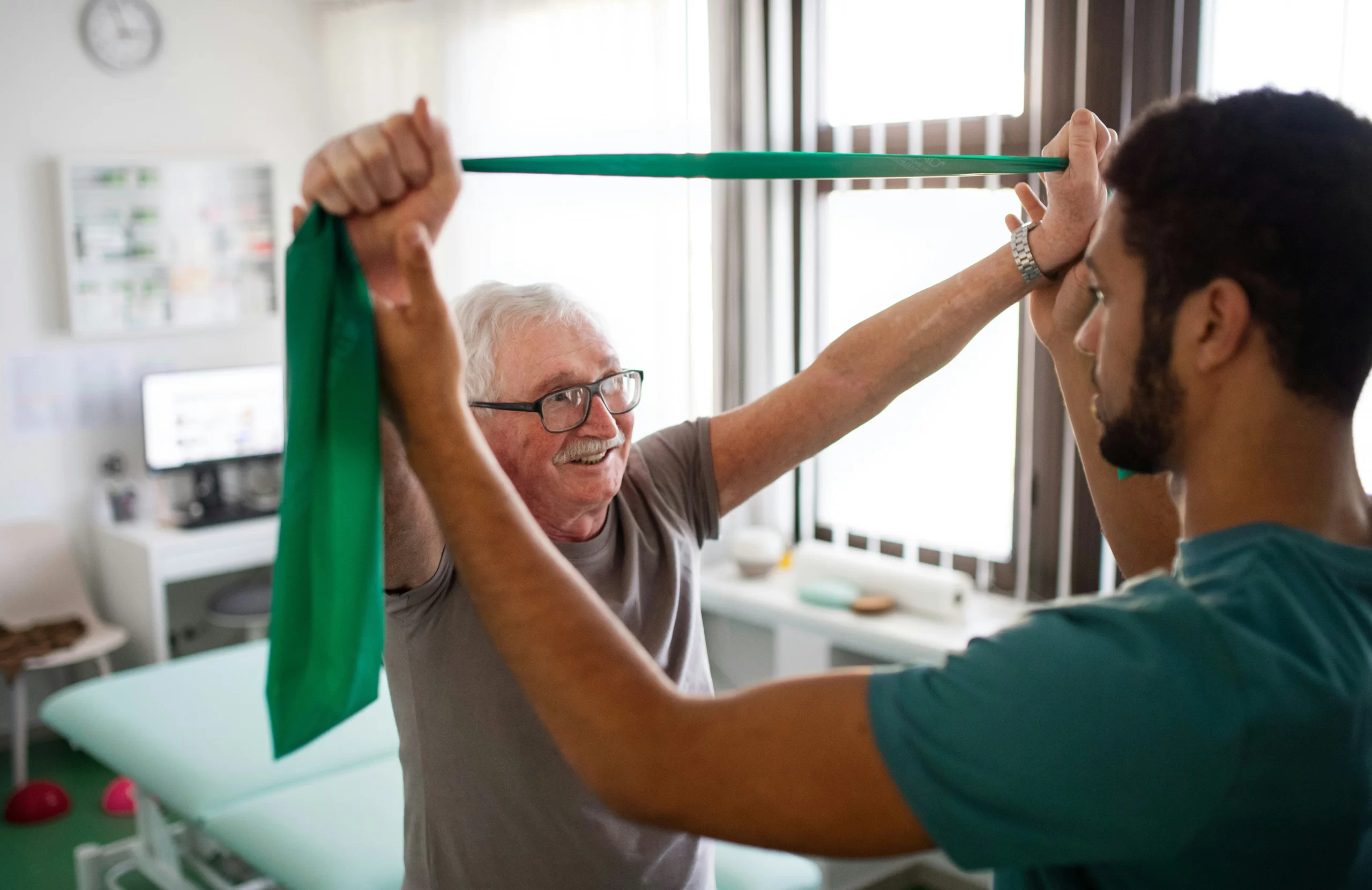
You’re home from the hospital, but those familiar stairs now feel impossible to climb. Simple tasks like getting dressed or making breakfast suddenly seem overwhelming. Sound familiar?
Here’s what most people don’t realize: There are two different types of therapists who can help you regain your independence, and understanding Physical Therapy vs. Occupational Therapy could be the key to your fastest recovery.
Physical therapists help your body move better. They focus on rebuilding strength, improving balance, and restoring mobility after injury or surgery.
Occupational therapists help you live better. They teach you how to safely perform daily activities like bathing, cooking, and getting around your home.
The real breakthrough happens when both work together in your home, creating a complete recovery plan that gets you back to the life you love.
Related: In Home Physical Therapy Houston: Expert Home Therapy Services
What Does a Physical Therapist Do in Home Health Care

Physical therapists in home health settings provide specialized rehabilitation services that help patients regain strength, mobility, and function after illness, injury, or surgery. Understanding what does a physical therapist do helps clarify why this service is essential for many recovering patients.
Restoring Movement and Mobility After Injury or Surgery
Physical therapists design targeted exercise programs to help you regain normal movement patterns following orthopedic surgery, cardiac procedures, or injury recovery. They assess your current mobility status and create progressive treatment plans that safely rebuild your range of motion.
Through hands-on techniques and guided exercises, they help restore proper joint mechanics and muscle activation patterns that support your return to normal activities.
Building Strength and Endurance for Daily Activities
Your physical therapist will develop strengthening exercises specifically tailored to improve your ability to perform everyday tasks like walking, climbing stairs, or getting up from a chair. They monitor your progress carefully, gradually increasing exercise intensity as your body responds to treatment.
This systematic approach ensures you build the physical capacity needed to return to your normal activities with confidence and safety.
Preventing Falls and Improving Balance Safety
Fall prevention becomes a primary focus for physical therapists working with home health patients, especially seniors. They conduct comprehensive balance assessments to identify specific areas for improvement and implement targeted interventions.
Your therapist will teach you specific exercises to improve coordination, stability, and reaction time while also evaluating your home environment for opportunities to enhance safety.
What Does an Occupational Therapist Do for Home-Bound Patients
Occupational therapists focus on helping patients maintain or regain the ability to perform meaningful daily activities in their home environment. Understanding what does an occupational therapist do reveals how this profession addresses the practical aspects of living independently while managing health conditions.
Teaching Adaptive Techniques for Daily Living Skills
Occupational therapists evaluate how your medical condition affects your ability to perform essential activities like bathing, dressing, cooking, and personal hygiene. They teach modified techniques and strategies that work within your current abilities while maintaining your dignity and independence.
For example, they might show you energy conservation techniques for meal preparation or demonstrate safe transfer methods for getting in and out of bed.
Recommending and Training with Assistive Equipment
Your occupational therapist will assess whether adaptive equipment could improve your safety and independence at home. They provide hands-on training with devices like shower chairs, grab bars, reachers, or specialized kitchen tools.
Rather than simply recommending equipment, they ensure you understand how to use these tools properly and integrate them effectively into your daily routines.
Cognitive Rehabilitation and Memory Strategies
Many home health patients experience cognitive changes due to stroke, traumatic brain injury, or medical conditions that affect mental clarity. Occupational therapists develop cognitive rehabilitation programs that help improve memory, attention, problem-solving, and executive function skills.
They teach practical strategies for organizing daily tasks, managing medications safely, and maintaining cognitive abilities needed for independent living.
Key Differences Between Physical Therapy and Occupational Therapy Approaches
While both therapies work toward improving your quality of life, understanding the physical therapy and occupational therapy differences helps clarify when you might need one or both services. These distinctions become particularly important when developing your home health care plan.
Focus Areas: Movement vs. Function in Daily Tasks
Physical therapy primarily addresses the mechanical aspects of movement: how well your joints, muscles, and cardiovascular system function during physical activities. The Physical Therapy vs. Occupational Therapy distinction becomes clear when you consider that PT focuses on the “can you move it?” question while OT asks “can you use it meaningfully?”
Occupational therapy examines how movement translates into functional performance during real-world activities that matter to your daily life and personal goals.
Treatment Methods: Exercise vs. Activity-Based Solutions
Physical therapists typically use exercise-based interventions, manual therapy techniques, and modalities like heat or electrical stimulation to address impairments. Their sessions often involve structured exercises designed to target specific muscle groups or movement patterns.
Occupational therapists, conversely, use activity-based interventions that simulate real-life tasks, teaching compensatory strategies and environmental modifications that help you adapt to functional limitations.
Recovery Goals: Mobility vs. Independence in Living
The fundamental difference in Physical Therapy vs. Occupational Therapy lies in their ultimate goals. Physical therapy aims to restore optimal physical function, reduce pain, and improve mobility to the greatest extent possible.
Occupational therapy focuses on maximizing your ability to live independently and participate in meaningful activities, even when physical limitations require creative solutions.
Benefits of Physical Therapy for Home Health Patients

Home-based physical therapy offers unique advantages that can significantly impact your recovery trajectory and long-term health outcomes. The benefits of physical therapy become even more pronounced when delivered in your familiar home environment.
Faster Recovery from Hospitalization or Surgery
Physical therapy services provided in your home help bridge the gap between hospital discharge and full recovery. Your therapist can begin treatment immediately after you return home, maintaining the momentum you built during your hospital stay.
Early intervention through Physical Therapy helps preserve the progress you made in the hospital while addressing new opportunities that arise in your home environment.
Pain Management Without Increased Medication
Physical therapy techniques like therapeutic exercise, manual therapy, and patient education provide effective pain relief strategies that support your overall wellness goals. Your therapist teaches you specific exercises and positioning techniques that you can use independently to manage discomfort.
This approach is particularly valuable for patients seeking comprehensive pain management solutions that complement their existing treatment plan.
Reduced Risk of Future Injuries and Hospital Readmissions
One of the most significant benefits of physical therapy involves preventing future health complications that could interrupt your recovery progress. Your therapist identifies movement patterns, strength opportunities, or balance areas that could benefit from improvement.
Through targeted interventions and patient education, physical therapy helps you maintain your health gains and build resilience against future setbacks.
Benefits of Occupational Therapy in the Home Setting
Home-based occupational therapy provides distinct advantages by addressing functional goals in your actual living environment. The benefits of occupational therapy are maximized when therapy occurs where you perform your daily activities.
Maintaining Independence in Your Own Environment
Occupational therapy in your home allows your therapist to observe exactly how you navigate your daily routines and identify specific opportunities to enhance independence. They can make real-time recommendations for environmental modifications, adaptive techniques, or equipment options based on your actual living situation.
This personalized approach through Occupational Therapy ensures that interventions are practical and immediately applicable to your lifestyle.
Family Caregiver Education and Support
Home-based occupational therapy naturally involves family members and caregivers who witness your daily progress firsthand. Your therapist educates family members about safe assist techniques, adaptive strategies, and ways to promote your independence while providing appropriate support.
This collaborative approach creates a supportive environment that reinforces therapeutic goals throughout your day, not just during formal therapy sessions.
Home Safety Modifications and Recommendations
Occupational therapists conducting home visits can perform comprehensive safety assessments that identify environmental opportunities specific to your condition and mobility level. They recommend practical modifications like installing grab bars, improving lighting, or rearranging furniture to create safer pathways.
These personalized safety improvements reduce accident risk while supporting your goal of aging in place safely and comfortably.
When You Need Both Physical Therapy and Occupational Therapy
Many home health patients benefit from receiving both physical and occupational therapy services simultaneously. Understanding when Physical Therapy vs. Occupational Therapy becomes “Physical Therapy and Occupational Therapy” helps ensure comprehensive rehabilitation that addresses all aspects of your recovery.
Post-Stroke Recovery Requiring Multiple Skill Areas
Stroke recovery typically involves both motor improvements that physical therapy addresses and functional goals that occupational therapy targets. PT outcomes vs OT outcomes show that combining both therapies produces superior results for stroke patients compared to receiving either service alone.
Physical therapy works on regaining movement, strength, and balance, while occupational therapy focuses on relearning daily activities like dressing, cooking, and personal care using your recovered abilities.
Complex Orthopedic Cases with Functional Limitations
Patients recovering from major joint replacements, fractures, or orthopedic surgeries often benefit from both movement restoration and functional retraining. Physical therapy addresses the mechanical aspects of healing by rebuilding strength, range of motion, and proper movement patterns.
Occupational therapy then helps you apply these physical improvements to real-world activities, teaching you how to perform daily tasks safely while protecting your healing tissues.
Chronic Conditions Affecting Both Mobility and Daily Tasks
Conditions like multiple sclerosis, Parkinson’s disease, or severe arthritis create opportunities that require both physical and occupational therapy expertise. Physical therapy focuses on maintaining mobility, preventing secondary complications, and managing symptoms through exercise and movement strategies.
Occupational therapy addresses the functional impact of these conditions on daily activities, teaching energy conservation techniques, adaptive strategies, and environmental modifications that help you maintain independence while managing progressive symptoms.
Get Expert Physical and Occupational Therapy at Home with Icon Home Health
Ready to reclaim your independence? At Icon Home Health, you don’t have to choose between physical therapy or occupational therapy. You get both when you need them.
Our family-owned agency has served the Greater Houston area for over 15 years, bringing Medicare-certified home health care services in Houston, Texas directly to your door. Our approach to Physical Therapy vs. Occupational Therapy focuses on your personal goals, whether that’s climbing stairs again or cooking your favorite meals.
No more exhausting therapy appointments. Our licensed therapists coordinate with your physician to deliver comprehensive rehabilitation in the comfort of your home. Contact Icon Home Health today and discover how we can help you achieve your recovery goals.